

Which LARC?
Long Acting Reversible Contraception (LARC)
Not all contraceptives have to be taken every day or each time you have sex. Long-acting reversible contraception is contraception that, once in place, is effective for months or years.
At 99%, they are more effective than any other form of contraception.
Contraceptive implant
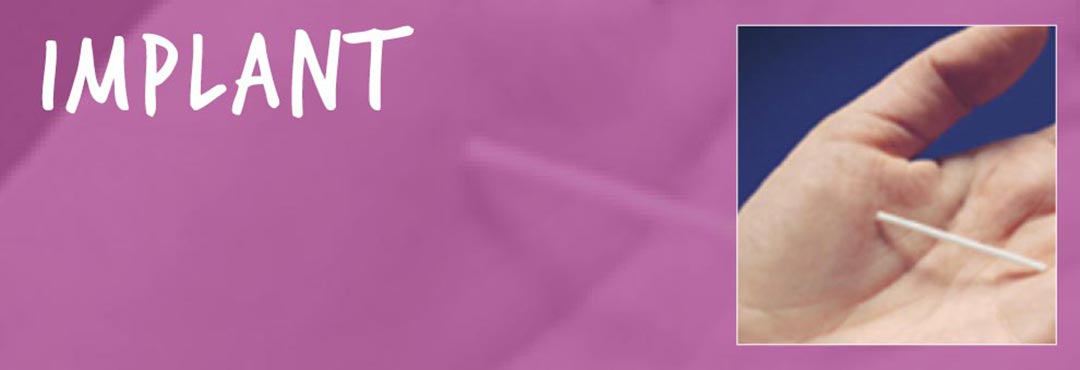
A small, flexible rod is put under the skin of your upper arm. It releases the hormone progestogen. It stops ovulation (releasing an egg), thickens cervical mucus to stop sperm reaching an egg, and thins the lining of the uterus (womb) to prevent a fertilised egg implanting. It works for up to three years.
Effectiveness: Over 99% effective at preventing pregnancy – one of the most effective methods there is.
Fit and forget: Once you’ve got one, you don’t need to remember to take or use alternative contraception for 3 years.
Periods: May be irregular, stop or last longer. May help with heavy, painful periods.
STI protection: No. Use external condoms or internal condoms to help protect yourself from STIs.
Listen to Rhian’s experience of having an implant:
Intra Uterine Copper Device (IUCD) or “Coil”
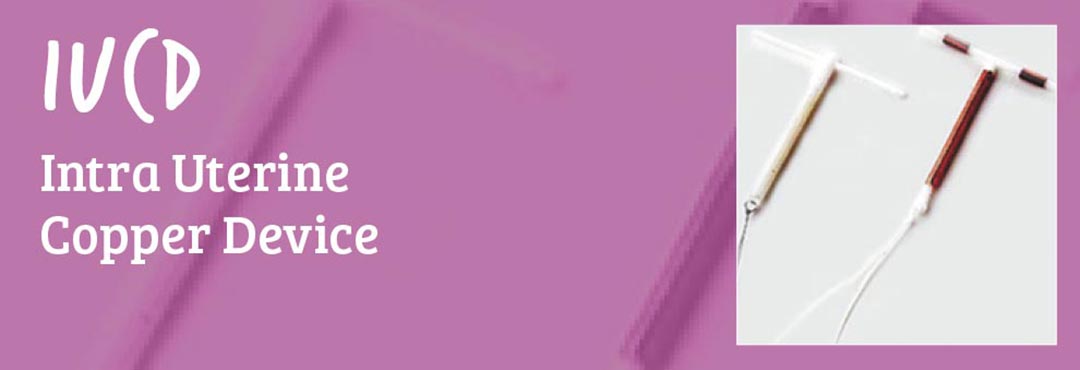
A small plastic and copper device is put into the uterus (womb), sometimes called the ‘coil’ or the ‘copper coil’. The copper prevents sperm from surviving and alters cervical mucus to prevent sperm from reaching an egg. An IUCD may also stop a fertilised egg implanting in the uterus.
There are different types of IUCD, to suit different people. An IUCD can stay in for 5-10 years, depending on the type. Some types of IUCD can be left until menopause if fitted after age 40.
To have an IUCD you will need to have a clinician who is specially trained to fit the device for you, usually doctor or a nurse. You will be required to have a swab to test for Chlamydia and Gonorrhoea. This is because if there are any infections present, they could cause complications with this procedure, and increase your risks of having issues post IUCD fitting. You will be required to have this test regardless of your sexual history; this is a routine part of the procedure.
If you have been asked to complete this swab prior to your appointment for IUCD fitting please see here. You can create a new account, or use your existing account to order your Chlamydia and Gonorrhoea vaginal swab. You can also order any additional tests that are suitable to your needs.
For information on how to access this procedure if your area please contact your local sexual health clinic, details of which can be found here. Or you can ask at your GP.
Effectiveness: Over 99% effective at preventing pregnancy – one of the most effective methods there is.
Fit and forget: Once you’ve got one, you don’t need to remember to take or use alternative contraception for at least 5 years.
Periods: May be heavier, longer or more painful. This may improve after a few months.
STI protection: No. Use external condoms or internal condoms to help protect yourself from STIs.
Listen to an experience of having an IUCD:

Intra Uterine System (IUS)
A small, T-shaped plastic device, which releases the hormone progestogen, is put into the uterus (womb). This thins the lining of the uterus to prevent a fertilised egg implanting and thickens cervical mucus to prevent sperm reaching an egg. They can last for up to 5 years but can be removed at any time.
To have an IUS you will need to have a clinician who is specially trained to fit the device for you, usually doctor or a nurse. You will be required to have a swab to test for Chlamydia and Gonorrhoea. This is because if there are any infections present, they could cause complications with this procedure, and increase your risks of having issues post IUCD fitting. You will be required to have this test regardless of your sexual history; this is a routine part of the procedure.
If you have been asked to complete this swab prior to your appointment for IUS fitting please see here. You can create a new account, or use your existing account to order your Chlamydia and Gonorrhoea vaginal swab. You can also order any additional tests that are suitable to your needs.
For information on how to access this procedure if your area please contact your local sexual health clinic, details of which can be found here. Or you can ask at your GP.
Effectiveness: Over 99% effective at preventing pregnancy – one of the most effective methods there is.
Fit and forget: Once you’ve got one, you don’t need to remember to take or use alternative contraception. The IUS can work for 3, 4 or 5 years depending which type you get.
Periods: May be lighter, shorter or less painful. May stop or become irregular.
STI protection: No. Use external condoms or internal condoms to help protect yourself from STIs.
Listen to an experience of having an IUS:
Contraceptive injection
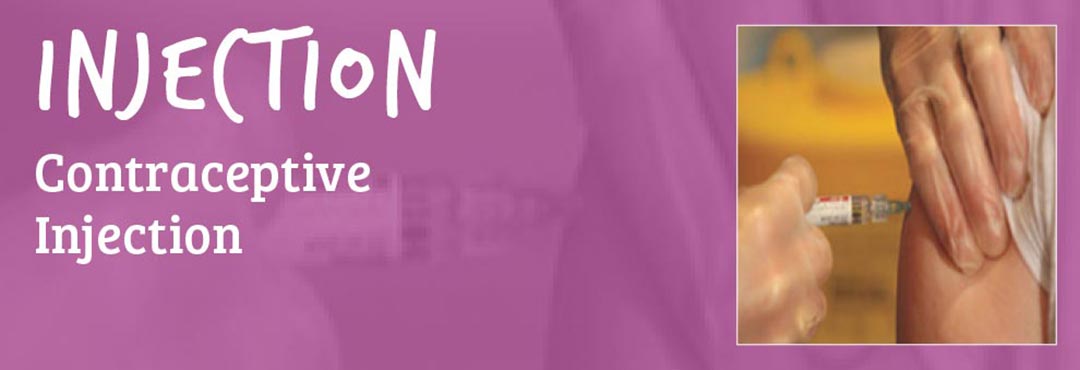
It releases the hormone progestogen which stops ovulation (releasing an egg), thickens cervical mucus to prevent sperm reaching an egg, and thins the lining of the uterus (womb) to prevent a fertilised egg implanting.
The injection can’t be removed from the body so any side effects may continue for as long as it works and for some time afterwards.
There are three types of contraceptive injection, these are known as Depo-Provera, which protects you from pregnancy for 12 weeks, the Notisterat, which protects you for eight weeks, and the Sayana Press which protects you for 12 weeks.
The Depo-Provera and the Notisterate are given to you by a doctor or nurse, whereas the Sayana Press will be taught to give to yourself.
Effectiveness: The injection is most effective when used perfectly. It’s 99% effective at preventing pregnancy with perfect use and 94% effective with typical use.
Fit and forget: Once you’ve had an injection, you don’t need to remember to take or use alternative contraception for 3 months (except Noristerat users – you’ll need another injection after 8 weeks). But remember to have your next injection on time.
Periods: Periods are likely to change. They may stop completely, or be lighter, irregular, or heavier or last longer.
STI protection: No. Use external condoms or internal condoms to help protect yourself from STIs.
Listen to an experience of having an injection: